Mexico's $62B Remittance Corridor Goes Digital — What It Means for Senders in 2026
The world's largest remittance corridor is moving from cash to digital.
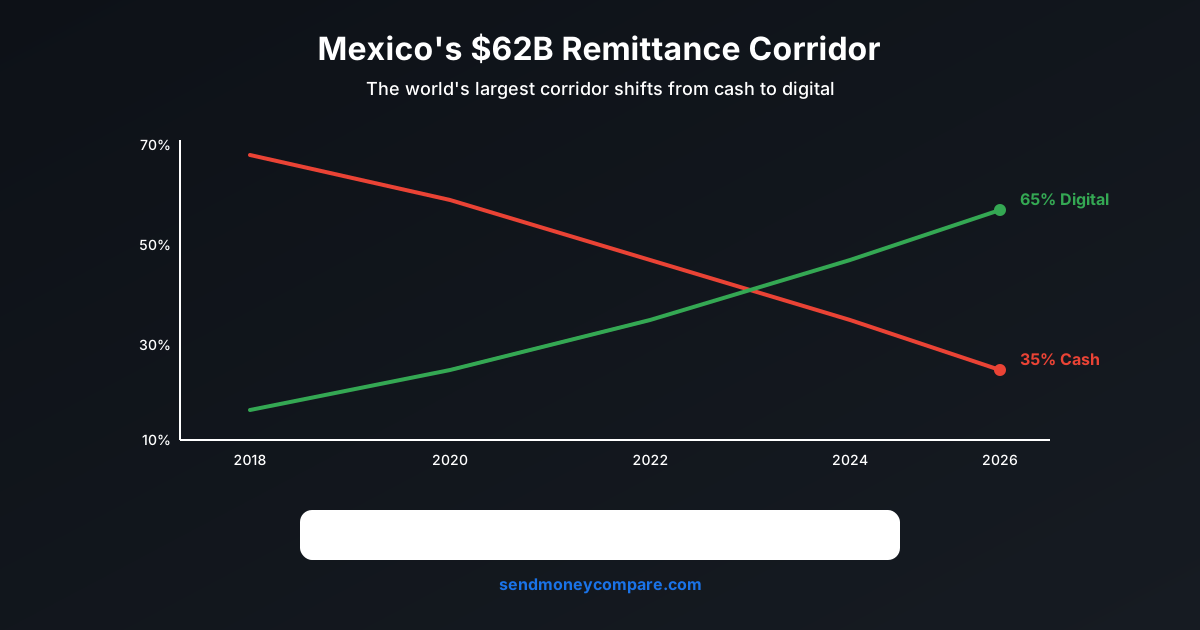
Bloomberg reported on March 17 that Mexico's US remittance corridor — worth roughly $62 billion a year — is shifting from cash to digital. According to Mexico's central bank, digital transfers overtook cash in the corridor for the first time in 2025.
Why the shift is accelerating in 2026
Three forces are converging to push the US-Mexico corridor digital:
- The 1% US remittance tax — The federal excise tax that took effect in January 2026 applies only to cash-funded transfers. Digital transfers are exempt, giving millions of senders a direct financial incentive to switch from agent counters to apps.
- Mexico's expanding digital infrastructure — Bank of Mexico's SPEI instant payment system now processes over 300 million transactions per month. Recipients who once needed cash pickup now have bank accounts or digital wallets that can receive instant deposits.
- Provider competition on USD-MXN — Remitly, Wise and newer apps such as Felix Pago and Bitso compete for digital USD-MXN transfers. Our USA to Mexico comparison page shows fees starting at $0 with exchange rate markups under 1%.
What this means for your transfers
The shift is unambiguously good for senders. As digital volume grows, providers compete harder on the corridor, pushing down both fees and exchange rate markups.
Cash-funded transfers now also carry the 1% US remittance tax, which funding from a bank account or card avoids.
Winners and losers
The clear winners are digital-first providers. Wise prices off the mid-market exchange rate — a real advantage, though the measured total-cost leader here is someone else: InstaReM, which led on 48 of the last 91 days we could compare.
The losers are traditional agent networks. Western Union still operates thousands of agent locations across Mexico, but 39% of its transactions were digital at the end of 2025, up from 32% a year earlier, Bloomberg reported. MoneyGram faces similar pressure.
That said, cash isn't dead yet. Bloomberg notes that over 70% of Mexicans still use cash for daily transactions, and cash pickup remains essential for remittances to rural areas. But the trajectory is clear: digital is becoming the default.
How to get the best rate on USD to MXN
If you send money to Mexico regularly, here's how to maximise what your recipient receives:
- Switch to digital — If you still send cash at an agent, switching to an app saves 3–5% per transfer plus avoids the 1% tax.
- Compare at your exact amount — Provider rankings change at different amounts. Our USA to Mexico comparison tool shows live rates from 21 providers.
The $62 billion corridor going digital isn't just a story about Mexico — it's a preview of where every major remittance route is heading. For a broader view, see our 2026 global remittance trends report and our guide to the cheapest ways to send money internationally.