Ahsan Mukhtar
In this guide
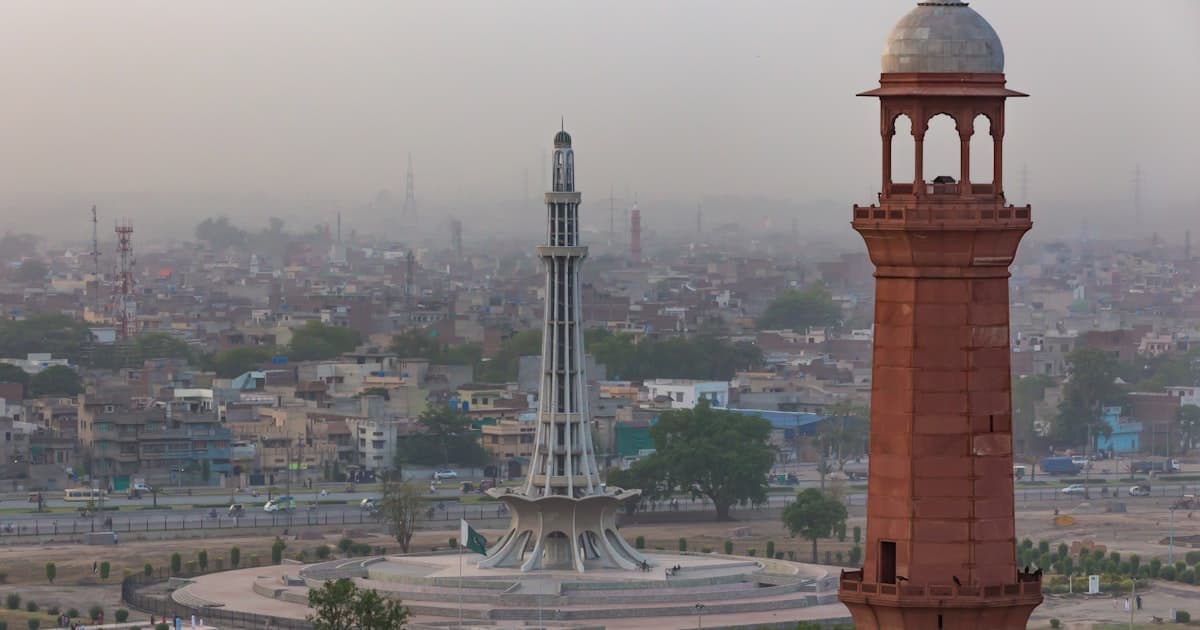
Pakistan Rupee Exchange Rate — Where Are We Now?
The Pakistani rupee has had an eventful 18 months. After the dramatic depreciation of 2022-2023 — when USD/PKR surged from around 175 to nearly 310 — the currency has gradually stabilised under the weight of IMF-mandated reforms, tighter monetary policy, and a crackdown on the informal hawala market. The policy rate behind that second factor is set by the State Bank of Pakistan and published with the reasoning in its monetary policy statements — the primary source for anything on this page about SBP policy, and worth reading over any forecast, including ours. The key cross-rates today:
Mid-market rates as at 3 October 2026:
- GBP to PKR: 366.2667 rupees per pound
- USD to PKR: 276.6578 rupees per dollar
- EUR to PKR: 311.3352 rupees per euro
These are mid-market rates, refreshed every 6 hours — not the rate you will be offered. The State Bank of Pakistan publishes its own mark-to-market revaluation rates, which is the official reference, and the live comparison shows what providers actually pay on this corridor. Interbank, official and provider rates all differ; a forecast is about the first of those.
Several structural factors underpin this relative stability. Pakistan's $7 billion Extended Fund Facility (EFF) with the IMF, approved in September 2024, has provided a policy anchor. The State Bank of Pakistan (SBP) has kept its benchmark interest rate at 15% — still elevated, but down from the peak of 22% in mid-2023. Inflation, which touched 38% in May 2023, has fallen to single digits, hovering around 7-8% year-on-year in early 2026.
Foreign exchange reserves at the SBP have climbed to approximately $12.5 billion, up from a precarious $4.5 billion in early 2023. That buffer is meaningful but still modest — covering roughly two months of imports. The current account deficit has narrowed sharply, partly due to compressed imports and record remittance inflows exceeding $30 billion annually.
For anyone sending money to Pakistan — whether from the UK, US, EU, or the Gulf — the question is whether this stability holds through 2026, or whether external shocks could trigger another leg of depreciation. Below, we break down what the data suggests for each major corridor.
GBP to PKR Forecast 2026 — What Analysts Expect
The GBP/PKR exchange rate is the single most watched currency pair for the Pakistani diaspora, and for good reason. The UK is home to over 1.5 million people of Pakistani origin, and the UK is one of the largest sources of remittances to Pakistan. As of March 2026, one British pound buys roughly 368 Pakistani rupees.
What's Driving GBP Strength?
The pound has held up relatively well in 2025-2026. The Bank of England (BoE) began cutting rates in August 2024 but has moved cautiously, with the base rate sitting at around 4.0% in early 2026. UK inflation has fallen back toward the 2% target, and while GDP growth remains sluggish (around 1.2% annualised), the labour market has been resilient enough to prevent aggressive easing.
This means GBP retains a meaningful interest-rate premium over many peers, which supports demand for sterling. Against the rupee specifically, any BoE pause or hawkish surprise tends to push GBP/PKR higher — good news for senders, less so for recipients in real purchasing-power terms.
Quarterly GBP to PKR Forecast Table
| Quarter | Pessimistic (PKR strengthens) | Base Case | Optimistic (PKR weakens) |
|---|---|---|---|
| Q1 2026 (actual) | 365 | 368 | 372 |
| Q2 2026 | 360 | 370 | 382 |
| Q3 2026 | 355 | 372 | 390 |
| Q4 2026 | 350 | 375 | 398 |
Base case (GBP/PKR 370-375 by year-end): The most likely scenario sees the rupee weakening modestly against the pound. Pakistan's inflation differential with the UK, even as it narrows, still favours gradual PKR depreciation. The SBP is expected to cut rates further, reducing the carry attractiveness of rupee assets. Meanwhile, the BoE's cautious approach keeps GBP supported.
Pessimistic scenario for senders (GBP/PKR drops to 350): This would require a combination of aggressive BoE cuts (perhaps triggered by a UK recession), a surge in Pakistan's forex reserves (perhaps from a new Saudi or Chinese credit line), and successful completion of IMF review milestones. Possible, but not probable.
Optimistic scenario for senders (GBP/PKR rises to 398): A global risk-off event — renewed oil-price spikes, emerging-market contagion, or a breakdown in Pakistan's IMF program — could push the rupee significantly weaker. If Pakistan misses a key IMF review, the knock-on effect on confidence could be swift.
Impact on UK-Pakistan Remittances
For someone sending £1,000 per month to family in Pakistan, the difference between the base case and the optimistic scenario is roughly PKR 23,000 per transfer — that is a meaningful amount in local purchasing power. According to SendMoneyCompare data, the best GBP to PKR provider rates can vary by 2-3% at any given time, which stacks on top of the underlying exchange-rate movement.
USD to PKR Forecast 2026 — Fed Policy & Dollar Strength
The US dollar remains the world's reserve currency and the benchmark against which the Pakistani rupee is most frequently quoted. USD/PKR is also the rate that the SBP manages most actively through its open-market operations. As of March 2026, one US dollar buys approximately 278 Pakistani rupees.
Federal Reserve Policy & the Dollar Index
The Fed began its easing cycle in September 2024 with a 50-basis-point cut and has since brought the federal funds rate down to around 3.75-4.00%. Market pricing suggests a further 50-75 basis points of cuts through the remainder of 2026, but the pace is uncertain. A stronger-than-expected US economy (or sticky inflation) could pause the cycle, supporting the dollar. Conversely, a sharper slowdown would accelerate cuts and weigh on USD.
The DXY dollar index has softened modestly from its 2024 highs but remains elevated by historical standards, reflecting the US economy's relative outperformance versus Europe and Japan.
IMF Program — The Anchor for USD/PKR
The most important near-term driver for USD/PKR is Pakistan's compliance with the IMF's Extended Fund Facility. The program's quarterly reviews carry disbursements of roughly $1 billion each. Successful reviews bolster reserves and market confidence; a failed review would likely trigger an immediate 5-10% depreciation as the market re-prices the risk of a balance-of-payments crisis.
As of early 2026, Pakistan has completed three reviews on schedule. The fourth review, expected in April 2026, will be closely watched for signals on fiscal consolidation, energy-sector reform, and privatisation timelines.
Quarterly USD to PKR Forecast Table
| Quarter | Pessimistic (PKR strengthens) | Base Case | Optimistic (PKR weakens) |
|---|---|---|---|
| Q1 2026 (actual) | 275 | 278 | 281 |
| Q2 2026 | 272 | 280 | 290 |
| Q3 2026 | 268 | 283 | 298 |
| Q4 2026 | 265 | 286 | 305 |
Base case (USD/PKR 283-286 by year-end): Gradual, managed depreciation of 2-3% over the year — roughly in line with the inflation differential between Pakistan and the United States. This is the SBP's preferred outcome: orderly, predictable, and consistent with the IMF's exchange-rate flexibility requirements.
PKR strengthens (USD/PKR falls to 265): This would require a sharp dollar sell-off globally (aggressive Fed cuts) combined with strong Pakistan fundamentals — a large current-account surplus, surging remittances, and perhaps a successful Eurobond issuance that boosts reserves above $15 billion.
PKR weakens significantly (USD/PKR rises to 305): An oil-price shock (Brent above $100), an IMF program breakdown, or a domestic political crisis could each trigger this scenario. The combination of any two would make it highly likely.
Pakistan's Forex Reserves Trajectory
Reserves remain the market's key vulnerability indicator. The SBP's gross reserves of ~$12.5 billion are bolstered by commercial bank reserves of roughly $5.5 billion, bringing total reserves to ~$18 billion. Analysts broadly expect reserves to reach $14-15 billion at the SBP level by year-end 2026 if the IMF program stays on track, providing a more comfortable buffer of 2.5-3 months of import cover.
EUR to PKR Forecast 2026
The euro-to-rupee corridor matters more than many people realise. EU countries — particularly Italy, Spain, Germany, and Greece — host significant Pakistani diaspora communities, and EUR/PKR remittances constitute a meaningful share of Pakistan's total inflows. As of March 2026, one euro buys approximately 302 Pakistani rupees.
ECB Policy & Eurozone Outlook
The European Central Bank has been more aggressive in its rate-cutting cycle than either the Fed or the BoE, reflecting the eurozone's weaker growth backdrop. The ECB's deposit rate has fallen to around 2.5% as of early 2026, with market expectations for a further cut to 2.0-2.25% by year-end. This divergence from the Fed and BoE has weighed on the euro, keeping EUR/USD around 1.085-1.090.
For EUR/PKR specifically, the rate is essentially a function of EUR/USD and USD/PKR. If the dollar weakens and the rupee holds steady against the dollar, EUR/PKR could actually rise — a favourable outcome for senders from Europe.
Quarterly EUR to PKR Forecast Table
| Quarter | Pessimistic (PKR strengthens) | Base Case | Optimistic (PKR weakens) |
|---|---|---|---|
| Q1 2026 (actual) | 299 | 302 | 305 |
| Q2 2026 | 296 | 304 | 314 |
| Q3 2026 | 292 | 307 | 322 |
| Q4 2026 | 288 | 310 | 330 |
Base case (EUR/PKR 307-310 by year-end): A modest increase driven primarily by rupee depreciation against the dollar, partially offset by euro weakness versus the dollar. The net effect is a slow drift higher in EUR/PKR — modestly favourable for European senders.
For those sending euros to Pakistan, SendMoneyCompare's comparison shows that provider margins on the EUR/PKR corridor tend to be wider than on GBP/PKR or USD/PKR, making it especially important to compare providers carefully before each transfer.
Key Factors That Will Move the Pakistan Rupee in 2026
Currency forecasting is inherently uncertain, but the Pakistani rupee's trajectory in 2026 will be shaped by a identifiable set of structural and cyclical drivers. Here are the seven most important factors to watch.
1. IMF Extended Fund Facility ($7 Billion)
The IMF program is the single most important anchor for the rupee. Each quarterly review carries a disbursement tranche, typically $1-1.1 billion. Successful reviews signal to the broader market — including bilateral creditors, portfolio investors, and rating agencies — that Pakistan's reform trajectory is intact. A missed or delayed review, conversely, could trigger capital flight and a sharp depreciation.
Key reform milestones to watch in 2026 include: energy-sector circular-debt reduction, broadening the tax base (particularly bringing agriculture and retail into the net), and state-owned enterprise privatisation (Pakistan International Airlines and power distribution companies are on the list).
2. SBP Monetary Policy — Rate Cut Trajectory
The SBP has already cut rates from 22% to 15% as inflation has receded. The market expects a further 200-300 basis points of easing through 2026, potentially bringing the policy rate to 12-13% by year-end. Each cut reduces the carry attractiveness of rupee-denominated assets, which can put downward pressure on the currency. However, if cuts are seen as appropriate (i.e., inflation is genuinely declining), the impact on PKR may be limited.
3. Oil Prices
Pakistan imports roughly 85% of its crude oil and refined petroleum products. Every $10 per barrel increase in Brent crude widens Pakistan's current account deficit by approximately $2.5-3 billion annually. With Brent trading around $78-82 in early 2026, any sustained move above $90 would pressure the rupee. Conversely, oil below $70 would be a significant tailwind for PKR stability.
4. Remittance Inflows
Overseas Pakistani workers sent home over $30.3 billion in the fiscal year 2024-25 — a record. These inflows are the single largest source of foreign currency for Pakistan, exceeding export earnings. The Gulf states (Saudi Arabia, UAE) account for roughly 60% of the total, with the UK (~18%) and the US (~8%) making up most of the rest. Any disruption to Gulf employment markets — or a shift back toward informal hawala channels — would be a significant negative for the rupee.
5. Political Stability
Pakistan's political landscape remains noisy. The coalition government faces ongoing challenges, and periodic uncertainty around policy continuity weighs on investor sentiment. Markets tend to react less to political headlines than they once did, but a genuine constitutional crisis or breakdown in civil-military relations could trigger capital flight.
6. Current Account Balance
Pakistan's current account swung into a small surplus in parts of 2023-24 thanks to severe import compression and strong remittances. In 2025-26, a modest deficit of around $2-4 billion is expected as imports normalise with economic recovery. The key variable is whether export growth (particularly textiles and IT services) can keep pace with rising import demand.
7. Forex Reserves
As noted above, SBP reserves of ~$12.5 billion provide roughly two months of import cover. The IMF program targets a reserves buildup to ~$15 billion by mid-2027. Every upside surprise (e.g., a successful Eurobond, a bilateral deposit from Saudi Arabia or China) strengthens the SBP's ability to smooth volatility. Every miss (e.g., delayed IMF disbursement, higher-than-expected oil imports) erodes the buffer.
Bottom line: The rupee's fate in 2026 is not a mystery — it hinges on the IMF program, oil prices, and remittance flows. If all three cooperate, PKR could modestly appreciate. If two or more turn negative, depreciation of 8-12% is plausible. For remittance senders, this means the range of outcomes for GBP/PKR by December 2026 spans roughly 350 to 398 — a £1,000 transfer could yield anywhere from PKR 350,000 to PKR 398,000.
How PKR Exchange Rate Changes Affect Your Remittances
Exchange-rate forecasts are intellectually interesting, but what actually matters to most readers is this: how much money does my family receive in Pakistan? Let us quantify the impact with a worked example.
Worked Example: Sending £1,000 to Pakistan
Assume you are sending £1,000 from the UK using a provider with a typical fee of £1.50 and a markup of 0.5% on the mid-market rate. At different GBP/PKR levels, here is what the recipient would receive:
| GBP/PKR Rate | Mid-Market Value (£1,000) | After 0.5% Markup + £1.50 Fee | Difference vs. Today (~368) |
|---|---|---|---|
| 350 | PKR 350,000 | PKR 347,747 | -PKR 18,413 |
| 360 | PKR 360,000 | PKR 357,702 | -PKR 8,458 |
| 368 (current) | PKR 368,000 | PKR 365,652 | — |
| 380 | PKR 380,000 | PKR 377,603 | +PKR 11,951 |
| 390 | PKR 390,000 | PKR 387,558 | +PKR 21,906 |
The difference between GBP/PKR 350 and 390 is roughly PKR 39,800 per £1,000 sent. For someone sending £1,000 monthly, that compounds to nearly PKR 478,000 over a year — equivalent to several months of household expenses in many Pakistani cities.
Tips for Timing Your Transfers
1. Set rate alerts. Most major providers — including Wise, Remitly, and ACE Money Transfer — let you set target-rate alerts. If you believe GBP/PKR will reach 380 in the coming months, set an alert and act when it triggers.
2. Use forward contracts where available. Some providers allow you to lock in today's rate for a future transfer. This is particularly useful if you have a large, predictable expense (e.g., a property purchase or tuition payment) and want certainty.
3. Dollar-cost average. If you send money regularly, spreading transfers across the month or quarter smooths out volatility. You will not always get the best rate, but you will avoid the worst.
4. Compare providers each time. According to SendMoneyCompare's comparison data, the spread between the cheapest and most expensive provider for GBP to PKR can exceed 3% on any given day. On a £1,000 transfer at GBP/PKR 368, that is over PKR 11,000 left on the table.
You can compare all providers for GBP to PKR in real time on our corridor page.
Best Way to Send Money to Pakistan in 2026
Knowing where the rupee is headed is only half the equation. The provider you choose determines how much of the exchange-rate movement actually reaches your recipient. SendMoneyCompare data shows that fee structures and exchange-rate markups vary enormously across providers — and the cheapest option depends on the amount you are sending, the currency pair, and the delivery method.
Top Providers for GBP to PKR in 2026
| Provider | Typical Fee (£1,000) | Exchange Rate Markup | Delivery Speed | Best For |
|---|---|---|---|---|
| ACE Money Transfer | £0 | 0.3-0.6% | Minutes to 24 hrs | Best PKR rate overall |
| Wise | £3-5 | 0.4-0.7% | 1-2 business days | Transparency & mid-market rate |
| Remitly | £0-2.99 | 0.5-1.0% | Minutes (Express) | Speed & first-transfer promos |
| TapTap Send | £0 | 0.4-0.8% | Minutes to hours | Mobile-first, no fees |
| Western Union | £0-4.90 | 1.0-2.5% | Minutes (cash pickup) | Cash pickup network |
Key Observations
ACE Money Transfer quotes this corridor regularly; on measured payouts the most frequent leader is WorldRemit, which led on 66 of the last 91 days we could compare. Founded by a Pakistani-British entrepreneur, ACE has deep expertise in the Pakistan corridor, and their zero-fee model combined with tight exchange-rate margins makes them hard to beat for bank-to-bank transfers. They also offer cash pickup through a network of partner banks in Pakistan.
Wise is the gold standard for transparency — you see the mid-market rate and a clear, upfront fee. For the Pakistan corridor, Wise's total cost is competitive, though ACE and TapTap Send can edge them on the received amount for certain transfer sizes.
Remitly frequently offers promotional rates for first-time users that are genuinely market-leading. Their Express delivery option (funded by debit card) delivers to Pakistan within minutes via partner banks like JazzCash and Easypaisa.
TapTap Send has built a loyal following in the UK-to-Pakistan corridor with its no-fee, app-only model. Rates are competitive, though the service is mobile-only and lacks some of the features of more established providers.
Western Union charges more but remains indispensable for cash pickup — particularly in rural areas where bank penetration is lower. If your recipient does not have a bank account, WU's network of 45,000+ agent locations in Pakistan is unmatched.
Our recommendation: For most regular senders from the UK, ACE Money Transfer or Wise will deliver the most rupees per pound. Always compare all providers for GBP to PKR before each transfer — rates change daily, and the leader board shifts frequently.
Historical GBP to PKR and USD to PKR Exchange Rates
To forecast where the rupee is going, it helps to understand where it has been. The table below captures the dramatic journey of the past five years — a period that saw the rupee lose roughly half its value against the dollar before stabilising under the IMF program.
5-Year Historical Exchange Rate Table
| Year | USD/PKR (Year-End) | GBP/PKR (Year-End) | Key Events |
|---|---|---|---|
| 2021 | 178 | 240 | Post-COVID recovery; current account widens |
| 2022 | 227 | 274 | Political turmoil (PM change), IMF program stalls, oil spike |
| 2023 | 282 | 359 | PKR crashes to 307 in Feb; $3B IMF standby approved Jul; stabilises |
| 2024 | 278 | 354 | New $7B EFF approved Sep; SBP begins rate cuts; inflation drops |
| 2025 | 281 | 362 | IMF reviews on track; reserves rebuild; SBP cuts to 15% |
| 2026 (YTD) | 278 | 368 | Continued stability; 4th IMF review pending |
Key Episodes That Moved the Rupee
April 2022 — Political crisis: The removal of Prime Minister Imran Khan through a no-confidence motion triggered a sharp sell-off. USD/PKR moved from ~182 to ~200 within weeks as markets priced in policy uncertainty and a potential breakdown in the IMF program.
January-February 2023 — The rupee crash: This was the most dramatic episode in recent memory. The SBP, under IMF pressure, allowed the rupee to float more freely. USD/PKR surged from ~228 to ~307 in a matter of weeks — a 35% depreciation. The interbank and open-market rates diverged by as much as 10%, fuelling panic and hoarding. GBP/PKR briefly touched 380.
July 2023 — IMF standby bailout: The approval of a $3 billion standby arrangement provided immediate relief. Reserves stabilised, and the rupee found a floor around 285-290 against the dollar. The informal-market premium narrowed sharply as authorities cracked down on illegal currency trading.
September 2024 — New EFF program: The $7 billion EFF provided a medium-term anchor. Markets interpreted it as a signal that structural reforms (however painful) would proceed, and the rupee actually appreciated modestly to ~278 by late 2024.
2025-2026 — Stability under the program: With the IMF program on track, the rupee has traded in a relatively narrow band of 275-285 against the dollar. This is the longest period of PKR stability since 2021, and it has restored some confidence among remittance senders and foreign investors.
What the History Tells Us
The Pakistani rupee's history is one of long periods of managed stability punctuated by sharp, crisis-driven depreciations. The rupee rarely strengthens significantly — when it does (as in late 2023 and 2024), it tends to be a partial reversal of an overshoot rather than a genuine re-rating. For remittance senders, the practical implication is that waiting for a dramatically better rate usually works in your favour (the rupee tends to weaken over time), but the timing is unpredictable and the moves can be abrupt.
SendMoneyCompare data shows that the most cost-effective approach for regular senders is to compare providers on each transfer, take advantage of promotional rates when available, and avoid large one-off transfers timed to speculative rate targets.
Pakistan Rupee Forecast: questions answered
Will the Pakistani rupee get stronger in 2026?
What is the best time to send money to Pakistan?
Is it better to send GBP or USD to Pakistan?
How does the IMF program affect the PKR exchange rate?
What is the cheapest way to send money to Pakistan?
How much does £1,000 convert to PKR right now?
Will SBP cut interest rates in 2026?
Should I wait for a better exchange rate?
About the author