Awais Imran
In this guide
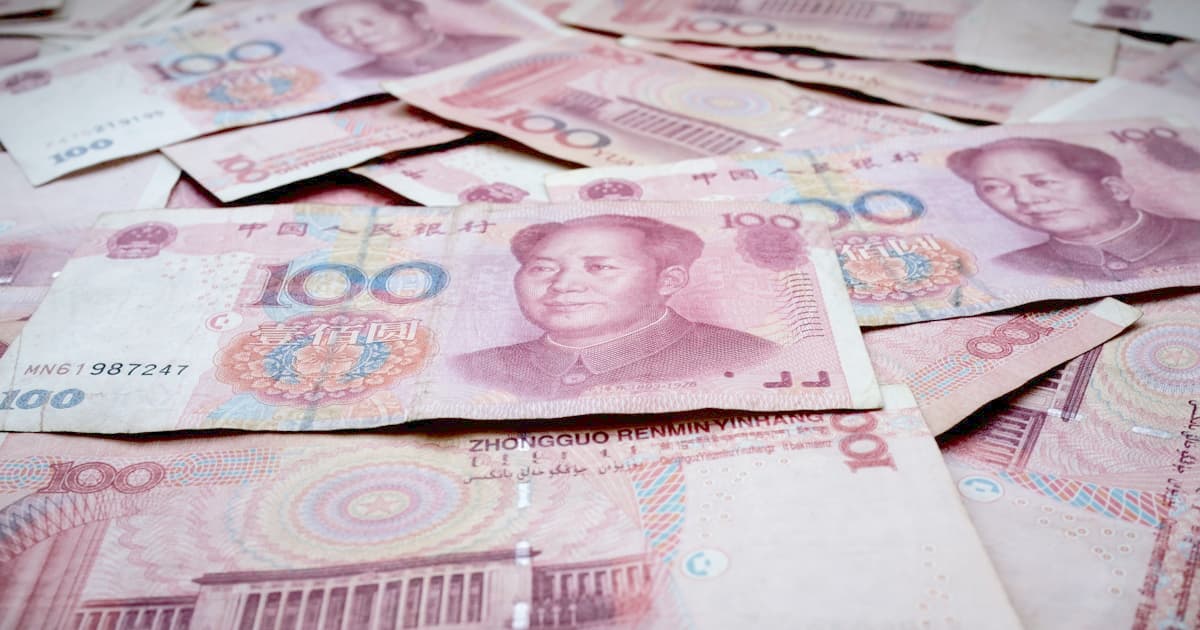
Can You Send Money Abroad from China?
Quick answer: Yes — both Chinese residents and foreign nationals living in China can send money abroad. Chinese nationals are subject to SAFE's $50,000 USD-equivalent annual conversion quota. Foreign workers can remit their verified after-tax salary with no hard cap, provided they show payslips and tax records. The key difference: you must use a licensed operator (bank, Wise via partner, SkyRemit, or Panda Remit) — unlicensed channels are illegal. Compare live CNY outbound rates →
Key fact: China processed 409,000 overseas workers in 2024 (18% more than 2023). 37% of expats in China sent funds abroad in H1 2024, up from 28% in 2022. The outbound remittance market is growing rapidly — and so is the choice of licensed apps.
China's foreign exchange system is managed by the State Administration of Foreign Exchange (SAFE), a department of the People's Bank of China (PBOC). The rules differ significantly depending on who you are:
- Chinese nationals: Subject to the annual $50,000 USD-equivalent individual conversion quota. Above this, SAFE approval and documentation (contracts, invoices, medical certificates) are required.
- Foreign nationals (expats) working in China: Can remit after-tax legitimate income with no fixed annual cap, but must provide payslips, employment contracts, and tax payment certificates (纳税证明) to their bank.
- Foreign students: Can remit living expenses and tuition refunds with supporting documents from their institution.
This guide focuses on the practical steps, cheapest providers, and compliance rules for all three groups.
What Is China's SAFE $50,000 Annual Quota and How Does It Work?
The most misunderstood rule in CNY outbound transfers is the SAFE annual quota. Here's exactly how it works:
- $50,000 USD equivalent per person, per calendar year — This is China's cap on how much foreign currency an individual Chinese citizen can purchase (convert from CNY) annually. It resets on January 1 each year.
- Two separate sub-quotas: A settlement quota (converting incoming foreign currency to CNY) and a purchase quota (converting CNY to foreign currency for outbound transfers). Each is $50,000/year independently.
- Documentation above $50,000: Transfers exceeding the quota require a signed contract between parties, tax certificates, invoices, proof of purpose (education, medical, trade), and SAFE registration. Chinese banks handle this process.
- January 1, 2026 — new KYC rules: Reporting thresholds were lowered to RMB 5,000 (≈$700) and USD 1,000 for large-value transaction monitoring. Record retention was extended from 5 to 10 years.
Practical tip: For most families and expats sending under $50,000/year, the quota is not an obstacle. SAFE checks happen at the bank or app level — if you're within quota and your ID is verified, the transfer processes normally. The friction increases significantly above $50,000.
Foreign nationals working in China are treated differently: they can remit legitimate after-tax income above $50,000 per year if they can document it as earned salary (payslips + tax proof). The quota is a constraint on currency conversion by Chinese nationals, not on legitimate foreign worker remittances.
Source and how to check it. The quota sits in the Measures for the Administration of Individual Foreign Exchange and its implementing rules, administered by the State Administration of Foreign Exchange (SAFE); the annual facility is set in USD-equivalent terms and applies per person per calendar year. SAFE publishes its instruments in its Rules and Regulations index — we link the section rather than a specific English page because SAFE does not maintain a stable English landing page for this rule, and a link that rots is worse than none. Your own bank applies it operationally and is the authority on how much of your facility is left, so confirm with them before planning a large transfer. Checked September 2026.
Which Providers Support CNY Outbound Transfers from China?
Best Providers for Sending CNY from China
| Provider | Best For | Fee | Countries | Regulated By |
|---|---|---|---|---|
| SkyRemit | Chinese residents & expats sending CNY out | Fixed ¥79/transfer | 180+ | PBOC + HK Customs & Excise |
| Panda Remit | WeChat Pay & Alipay top-ups, then send abroad | Low variable fee | 30+ | FCA, FinCEN, AUSTRAC |
| Wise | Expats with verified Wise account sending CNY | From 0.41% | 70+ | FCA, FinCEN, MAS + PBOC partner |
| Chinese bank (ICBC/BOC/CMB) | Large transfers, full SAFE documentation | ¥150–¥300 + markup | Global | PBOC/SAFE |
| UnionPay + MoneyExpress | UnionPay card holders sending to 80+ countries | Varies | 80+ | UnionPay International |
Rates and fees verified May 2026. Compare live CNY outbound rates →
SkyRemit — China's Leading Outbound App
SkyRemit is powered by Skyee, a subsidiary of LAKALA (PBOC-licensed, A-share listed, stock: 300773). It specialises exclusively in sending CNY outbound — the only major operator on this platform built specifically for China-to-world transfers. Key facts:
- Fixed fee of just ¥79 per transfer regardless of amount (up to limits)
- Delivers to 180+ countries in 50 local currencies via bank deposit
- Funded via WeChat Pay or Alipay (both supported as payment source)
- Regulated by PBOC (mainland China) and Hong Kong Customs & Excise Department
- No hidden exchange rate markup on popular corridors
Wise in China
Wise is available in China through a licensed local partner. It supports CNY transfers to UnionPay bank accounts (CIPS member banks only). Per-transaction cap is 50,000 CNY; annual recipient limit is 500,000 CNY. As of January 2025, Wise enhanced its cross-border transfer services with higher limits for verified users.
How Do Foreign Nationals (Expats) Send Money Home from China?
If you're a foreign national living and working in China, the remittance process is more straightforward than for Chinese nationals — but requires documentation. Here's the step-by-step process via a Chinese bank:
- Open a foreign currency account at Bank of China (BOC), ICBC, or China Merchants Bank — BOC is the most international-friendly. Bring your passport and work/residence permit.
- Obtain your tax payment certificate (纳税证明) from your employer's HR department or directly from the local tax bureau. This proves your income was taxed in China.
- Present payslips for the period you're remitting. Most banks require the last 3–6 months.
- Fill in the forex purchase form at the bank counter. Declare the purpose as "salary remittance" or "personal income transfer".
- Transfer is processed — typically 1–3 business days for SWIFT, same-day for CIPS where available.
For smaller amounts (under ¥50,000 equivalent), apps like SkyRemit and Wise are faster and cheaper than going to a bank branch. You still need to verify your identity and income source, but the app handles the SAFE compliance documentation electronically.
Key data: 98% of expat transfers from China in early 2024 occurred via licensed financial institutions (People's Bank of China data). Using unlicensed channels (underground banking, unofficial hawala networks) is illegal under Chinese law and carries serious penalties including fines and deportation.
What Does It Cost to Send CNY Abroad? Real Cost Comparison
The true cost of sending CNY abroad has two components: the transfer fee and the exchange rate markup. Here's how the main channels compare on a ¥10,000 transfer to AUD (a major China-Australia corridor):
CNY Outbound Cost Comparison — ¥10,000 to AUD
Illustrative figures — exchange rates move daily. Compare live rates →
The real cost gap between apps and banks is approximately 1.5–2.5% on every transfer. On a ¥50,000 transfer (the annual SAFE quota limit), that's a difference of ¥750–¥1,250 going to your bank instead of your recipient.
For the China-to-Australia corridor alone, Australia received USD $3.5 billion in remittances from China in 2024 — representing 12.1% of Australia's total remittance inflows (source: MoneyTransfer.com.au). The cost savings from using apps over banks on this volume are enormous.
Top Destination Countries for CNY Outbound Remittances
China's outbound remittances follow the Chinese diaspora and international student/worker flows. The highest-volume CNY-to-foreign-currency corridors in 2024–2025:
- CNY → AUD (China to Australia): Australia is home to 1.4 million people of Chinese heritage. Australia received $3.5 billion from China in 2024 — the single largest destination by volume for private remittances out of China.
- CNY → CAD (China to Canada): Canada has one of the world's largest Chinese diaspora communities. The transfer cost from Canada to China averages 5.8% (Q3 2023, World Bank data). CNY outbound to CAD is similarly priced.
- CNY → GBP (China to UK): Approximately 500,000+ British Chinese residents. UK universities receive significant tuition flows from mainland China — a key driver of large CNY → GBP transfers.
- CNY → USD (China to USA): One of the world's largest bilateral remittance corridors. Chinese students studying in the US drive significant CNY → USD flows for living expenses and tuition.
- CNY → EUR (China to Europe): Germany, France, and Spain have significant Chinese worker populations. Growing with China's BRI investment in European infrastructure.
- CNY → JPY, KRW, SGD: Regional corridors for Chinese workers in Japan, South Korea, and Singapore — served well by SkyRemit and Wise.
For all of these corridors, our live comparison tool shows real-time CNY outbound rates from all licensed operators.
Using WeChat Pay and Alipay to Fund Outbound Transfers
One of the most convenient features of apps like SkyRemit is the ability to fund transfers directly from your WeChat Pay or Alipay wallet — no bank branch required. Here's how it works:
- Download SkyRemit or Wise app and complete identity verification (Chinese national ID or foreign passport + residence permit)
- Select your destination country and currency
- Enter recipient bank details — account number, IBAN or SWIFT, full name
- Select WeChat Pay or Alipay as your funding method
- Confirm and pay — the CNY debit happens instantly from your wallet
- Track delivery — typically 1–2 business days to most destinations
WeChat Pay International Expansion (2026)
As of April 2026, WeChat Pay expanded cross-border QR code payments to South Korea, Sri Lanka, Thailand, Malaysia, and Singapore. For these countries, Chinese visitors and residents can pay using WeChat Pay directly with local merchants — though this is different from remittance (it's point-of-sale payments, not bank-to-bank transfers).
Alipay Limit Increases
Alipay increased its single transaction limit from US$1,000 to US$5,000 in 2024–2025, and the annual cap from US$10,000 to US$50,000 per recipient. Fee exemptions apply for international card purchases under CNY 200 (3% fee waived).
How Does CNY → CNH Affect Your Transfer?
This is one of the most technically important concepts for anyone sending money from mainland China:
- CNY (Renminbi, onshore yuan) — Traded within mainland China. Regulated by SAFE and the PBOC. Exchange rate is managed (not freely floating) within a daily band set by the PBOC fixing rate.
- CNH (offshore yuan) — Traded freely in Hong Kong, Singapore, London, and other international markets. The same currency, but a separate, market-determined rate.
- The spread: CNH typically trades within 0.3–0.8% of CNY in calm markets. During stress (e.g., US-China trade tensions), the gap can widen to 1–2%. This spread is important because some providers quote CNH rates, which may look better or worse than onshore CNY rates depending on market conditions.
Why it matters for senders: If you're sending CNY from a mainland bank account, you're selling CNY (onshore). Your provider should be quoting the CNY rate, not CNH. If they quote CNH and it's weaker, you receive fewer foreign currency units. Always verify which rate your provider is using before confirming.
The PBOC sets a daily "fixing rate" (中间价) at 9:15am Beijing time, and CNY can trade within ±2% of this rate. In 2024–2025, the PBOC used the fixing mechanism to prevent excessive CNY depreciation during periods of US dollar strength and trade tariff escalation.
What Documents Do You Need to Send Money from China?
Documentation requirements vary by amount and sender type:
Under ¥50,000 equivalent (most standard transfers)
- Chinese nationals: Valid Chinese national ID card (已实名认证). SAFE quota consumed automatically from your annual $50,000 limit.
- Foreign nationals: Passport + valid residence/work permit. Some apps require employment contract on first use.
Above ¥50,000 equivalent (or above $50,000 annual quota for Chinese nationals)
- Signed contract between the two parties (notarized if large amount)
- Tax payment or exemption certificate from State Taxation Administration
- Invoice or proof of purpose (education enrollment letter, medical invoices, property purchase contract)
- Bank application form declaring purpose of transfer
Foreign workers remitting salary (no annual cap)
- Employment contract showing salary amount
- Last 3–6 months of payslips
- Individual income tax payment certificate (个人所得税完税证明) from employer or local tax bureau
- Passport and valid work permit
Since January 1, 2026, all financial institutions in China are required to flag transactions above RMB 5,000 (≈$700) or USD 1,000 for large-value monitoring. This is a reporting requirement — it does not block your transfer but adds a compliance audit trail.
Common Mistakes When Sending CNY Abroad
- Using an unlicensed channel: Underground banking networks ("地下钱庄") are illegal in China. Penalties include fines, asset seizure, and criminal charges. Always use PBOC-licensed operators or internationally regulated apps.
- Not checking if Wise uses CNY or CNH: Wise routes CNY transfers via CIPS member banks — ensure your receiving bank is a CIPS participant if using Wise from China.
- Forgetting the annual quota resets on January 1: Many people exhaust their $50,000 quota in November/December, then forget they have a fresh $50,000 available from January 1. Plan large transfers accordingly.
- Sending during Chinese public holidays: Chinese New Year (typically January/February), Golden Week (October 1–7), and National Day create processing backlogs of up to a week at Chinese banks.
- Entering recipient name incorrectly: Name must match the receiving bank's records exactly, including middle names and spacing. A mismatch causes delays or returns the transfer.
- Assuming the PBOC fixing rate is the rate you get: Your provider adds a margin over the PBOC mid-market rate. This markup — not the headline rate — is where costs hide. Always compare the total recipient amount.
Sending CNY abroad: questions answered
How much money can you send from China per year?
What is the cheapest way to send money from China abroad?
Can foreigners send money out of China?
Is Wise available in China for outbound CNY transfers?
What is the difference between SkyRemit and PandaRemit for China outbound transfers?
Do I need to pay tax on money sent out of China?
About the author