Awais Imran
In this guide
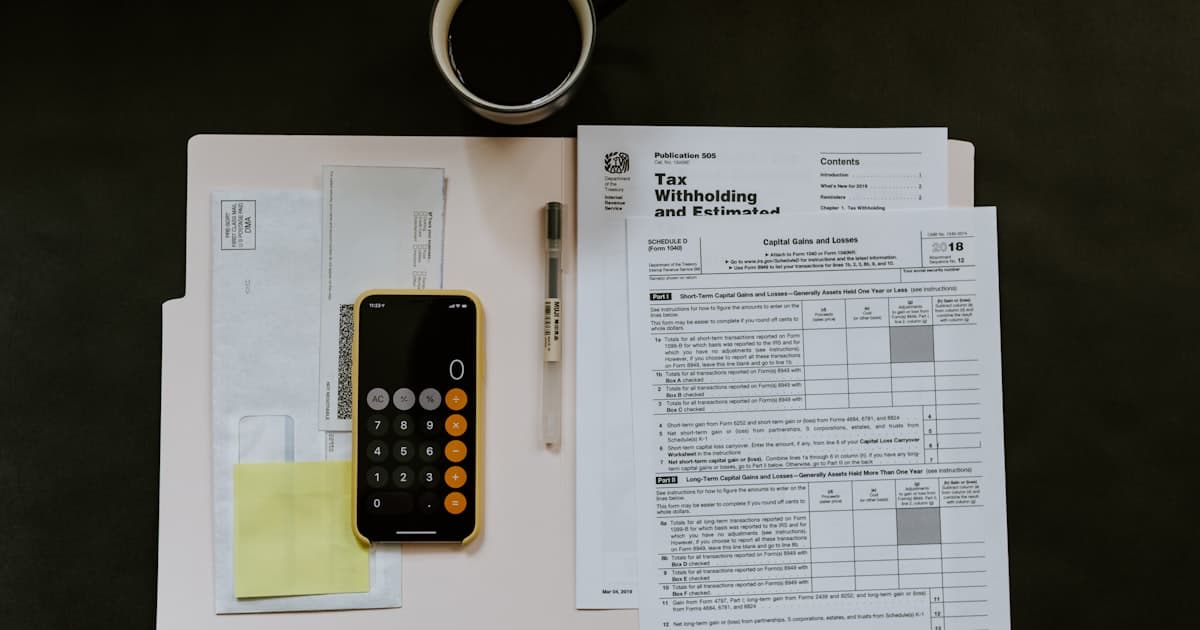
Tax Season Creates a Money-Movement Problem
Quick answer: For expats moving money across US, UK, EU, Australia, Canada, or New Zealand during tax season 2026, XE is the strongest option for transfers above $25,000, same-currency cross-border payments (e.g., USD in the US to a USD account abroad), and forward contracts that lock an exchange rate up to 24 months ahead. For transfers under $10,000, Wise is typically cheaper. XE has 30+ years of history (founded 1993), a Trustpilot score of 4.5/5 (87K reviews), and now offers a personal Multi-Currency Account in the US, UK, EU, and New Zealand. Thanks to XE's bank-funded transfer model, XE users are also exempt from the new 1% US remittance tax that took effect January 1, 2026.
If you're an American citizen living in London, a Canadian entrepreneur with an Australian subsidiary, a British expat in Spain with rental income in the UK, or any other combination of cross-border tax resident — tax season is when your money problems actually become money movement problems.
You need to pay the IRS in USD while your paycheck arrives in GBP. HMRC owes you a refund in pounds but you now live in Germany. You have to pay a New York CPA from a Dubai bank account. Australian rental income needs to settle estimated tax to the ATO before October 31.
This guide walks through how international workers and expats use XE Money Transfer and its Multi-Currency Account to solve these problems fast — often within hours — across the six major expat markets.
The 2026 Tax Deadline Calendar You Need to Move Money Around
| Country | Tax year | Filing deadline | Payment deadline |
|---|---|---|---|
| 🇺🇸 United States (IRS) | Jan 1 – Dec 31 | April 15, 2026 (auto 2-month ext. for expats; Oct 15 on Form 4868) | April 15, 2026 |
| 🇺🇸 FBAR (FinCEN 114) | Jan 1 – Dec 31 | April 15, 2026 (auto ext. to Oct 15) | Reporting only |
| 🇬🇧 United Kingdom (HMRC) | April 6 – April 5 | January 31, 2026 (online) | January 31, 2026 |
| 🇨🇦 Canada (CRA) | Jan 1 – Dec 31 | April 30, 2026 (expats: June 15, 2026) | April 30, 2026 |
| 🇦🇺 Australia (ATO) | July 1 – June 30 | October 31, 2026 | With filing |
| 🇳🇿 New Zealand (IRD) | April 1 – March 31 | July 7, 2026 (or March 31 next year via tax agent) | With filing |
If you have obligations in multiple countries, money may need to flow in both directions — often across currencies. That's where XE's cross-border infrastructure becomes valuable.
The Same-Currency Problem Most Providers Can't Solve
Here's a scenario almost every expat runs into:
You're a US citizen living in Berlin. You earn in EUR, but your US tax bill must be paid in USD from a US bank account. You also have a USD savings account in the US that you want to top up from your Euro earnings — but without converting back and forth.
The twist: You might need to move USD from your Euro-denominated account (where a freelance client paid you in USD) to your US USD account — same currency, different country, different legal entity. Your European bank will convert it to EUR and back, costing you 4–6% in spread. Your US bank will charge $25–50 for the incoming wire plus correspondent fees.
Most money transfer services can't do this because they're built for currency conversion, not currency preservation across borders.
XE's Solution: Multi-Currency Account + Same-Currency Payouts
The Xe Multi-Currency Account (MCA), available for personal users in the US, UK, EU, and New Zealand, holds:
- US Dollars (USD)
- Euros (EUR)
- British Pounds (GBP)
- Australian Dollars (AUD)
- Canadian Dollars (CAD)
- New Zealand Dollars (NZD)
— plus additional currencies depending on your region (up to 18 total for business users).
Same-currency cross-border transfers are confirmed available:
- Personal account holders with a currency sub-account enabled can send same-currency payments internationally
- Business accounts in AU, CA, EU, NZ, UK, and US can send same-currency in AUD, CAD, EUR, GBP, NZD, and USD
- A send fee applies (transparent, shown before confirming) — unlike standard FX-based transfers which are "no fee"
What this unlocks for tax season:
- Pay your US CPA from your London USD earnings — USD → USD, no FX loss
- Move inherited GBP from a UK account to a UK-based GBP sub-account that you access from abroad
- Transfer EUR between French and German tax advisors without losing 2-3% in spread twice
- Pay US estimated taxes from USD earnings held abroad — no conversion needed
How Fast Can XE Actually Move Your Money?
XE's marketing says "90% of transfers arrive in minutes." The FAQ says 1-4 business days. The reality for tax-season users:
| Scenario | Typical speed |
|---|---|
| MCA → MCA (same currency, internal) | Instant |
| Bank-funded USD → EUR, major corridor | Same day to 1 business day |
| Wire-funded large transfer ($10,000+) | ~24 hours once funds clear |
| Card-funded transfer | Within 24 hours |
| First-time user (including KYC) | 2-3 business days (add 1-2 for manual doc review) |
| Exotic corridors or compliance review | 3-5 business days |
Tax-season practical advice: If you're a first-time XE user and need money to land before a deadline, start at least 5 business days before the deadline. If you're an existing verified user, 1-2 business days is usually enough.
The Forward Contract Advantage
Here's where XE shines for planners: forward contracts.
A forward contract lets you lock today's exchange rate for a future transfer, up to 24 months ahead. You don't need to have the money in hand — you just commit to the rate and the settlement date.
Tax-season use case:
- In January, you know you'll owe the IRS roughly $30,000 USD by April 15
- GBP/USD is currently 1.35 — favorable for you
- You book a forward contract with XE: convert £22,222 to $30,000 USD on April 10
- Even if the pound crashes to 1.20 by April, you still get your $30,000 at the locked rate
Without a forward, if GBP/USD drops from 1.35 to 1.20, your £22,222 only converts to $26,666 — a $3,334 shortfall you'd have to cover from savings. Forward contracts are the single most powerful tax-season tool XE offers.
XE vs Wise vs OFX for Tax-Season Transfers
The three providers most likely to handle your tax-season needs are XE, Wise, and OFX. Here's when each wins:
| Scenario | Best Provider | Why |
|---|---|---|
| $1,000–$10,000 simple FX | Wise | Transparent % fee, mid-market rate, fastest for standard corridors |
| $10,000–$25,000 FX | Wise or XE/OFX (compare) | Close call. Wise's percentage fee grows; XE/OFX flatten cost |
| $25,000+ large transfer | XE or OFX | No % fee, markup doesn't scale linearly. OFX zero fee above $10K |
| Forward contracts | XE | Up to 24 months. OFX also offers, Wise does not |
| Same-currency cross-border | XE or Wise | Both support. Wise has more local account details; XE has more sending countries |
| Limit orders (auto-trigger) | XE | Set target rate; transfer executes automatically when hit |
| Dedicated human support | XE ($50K+/year) or OFX | Both assign relationship managers. XE US-based; OFX 24/7 global |
| Multi-currency wallet for daily use | Wise | More currencies (40+), local account details in 10+ currencies, debit card |
Break-even math: On a typical major corridor (USD ↔ EUR/GBP/AUD), the cost crossover point where XE becomes cheaper than Wise is around $25,000. Below that, Wise's transparent 0.43-0.7% fee wins. Above that, XE's rate-based markup (0.5-2%) doesn't grow with transaction size the same way.
For a detailed side-by-side, see our Wise comparison pages.
2026 US Remittance Tax: Why XE Users Are Exempt
A major tax-season development: the US now charges a 1% excise tax on outbound remittances, effective January 1, 2026 (enacted July 4, 2025 as part of the "One, Big, Beautiful Bill Act"). The IRS published proposed regulations on April 10, 2026.
But here's the critical detail: the tax applies only to transfers funded by cash, money orders, or cashier's checks. The following are exempt:
- ✅ Bank account transfers (ACH, wire from checking/savings)
- ✅ US-issued debit card payments
- ✅ US-issued credit card payments
- ✅ SWIFT bank-to-bank transfers
- ✅ Any digital/online transfer from a regulated provider
XE's funding methods — ACH, wire, card — are all exempt. Unlike cash-to-cash services like Western Union and MoneyGram, XE users pay 0% on the 1% tax because the tax simply doesn't apply to how XE is funded.
On a $10,000 transfer to Mexico for a property tax payment:
- Western Union cash: $100 remittance tax + ~$50 fee + 2-4% FX markup = $350-550 total cost
- XE: $0 remittance tax + $0 fee + 0.5-1.5% FX markup = $50-150 total cost
That's a $300-400 saving per $10,000 just from the tax structure — before you even factor in XE's better exchange rate. See our full analysis of the IRS remittance tax rules.
Seven Tax-Season Scenarios Where XE Makes Sense
1. Paying US Taxes While Living Abroad
An American in London with £30,000 to owe the IRS by April 15. Book a forward contract in January (locks rate). Fund the transfer via your UK bank on April 10. Money lands in your US bank before the 15th. Avoids last-minute rate risk.
2. Receiving a Foreign Tax Refund
HMRC refunds £2,000 to your UK account in March. You've since moved to Germany. Use XE to move GBP → EUR or hold in MCA for later. Alternative: use same-currency transfer to a GBP account you control in Germany.
3. Paying a Foreign Tax Advisor
A US CPA charges $500 for your expat tax return. You're living in Dubai. Use XE same-currency USD → USD to pay the CPA's US account. No FX loss, no double conversion.
4. Paying Foreign Property Taxes
Own an apartment in France? Autumn taxe foncière and taxe d'habitation bills arrive in EUR. If you're a US owner, book a USD → EUR forward contract in spring when the rate is favorable. Lock it in, pay the bills in autumn at your preferred rate.
5. Estimated Quarterly Tax Payments
US expats paying quarterly estimated taxes (April 15, June 15, September 15, January 15) can use XE's Recurring Payment Agreement (RPA) to automate monthly/quarterly transfers at a fixed rate. Setup requires a phone call but removes ongoing hassle.
6. FBAR-Aware Consolidation
If you hold over $10,000 aggregate in foreign accounts at any point in the year, you must file FBAR (FinCEN 114). Some expats intentionally consolidate — or avoid accumulating — foreign balances to stay under the threshold. XE's MCA, since it's tied to XE's licensed entity in each region, may or may not count as a "foreign account" depending on your situation. Always consult a tax advisor — this article isn't tax advice.
7. Repatriating Investment Income
Australian expat in New York with rental income hitting an AUD account. Use XE limit orders: set target rate at 0.68 AUD/USD. When hit, transfer triggers automatically. Gets the money across without watching rates daily.
How to Set Up XE for Tax Season (Step by Step)
- Sign up at xe.com — takes about 5 minutes. Available in US, UK, EU, AU, CA, NZ.
- Complete KYC before your first transfer. Upload: passport or driver's license, proof of address (utility bill/bank statement), selfie matching ID. Electronic verification is often instant; manual review takes 1-2 business days.
- Activate your Multi-Currency Account (MCA) if you're in US, UK, EU, or NZ. No setup or monthly fee.
- Fund your account via bank transfer (ACH/SEPA/Faster Payments/PayID — fee-free in most regions) or debit/credit card (faster, may have fees).
- For transfers under $25,000: Use the standard online transfer flow. Most corridors settle within 24 hours.
- For transfers over $25,000: You'll get phone support from a dedicated XE relationship manager (automatic at $50K+/year of volume).
- To lock a future rate: Request a forward contract — typically requires a phone call for personal accounts. Available up to 24 months ahead.
- Set rate alerts in the app so you can strike when your target rate appears.
Start at least 5 business days before any tax deadline if you're a first-time XE user. 1-2 business days is usually enough for verified users.
The Limits You Should Know About
XE's per-transfer limits (after full KYC):
| Region | Max online transfer | Min transfer |
|---|---|---|
| 🇺🇸 US | $500,000–$535,000 USD | $3,000 USD (for wire) |
| 🇬🇧 UK | £350,000–£375,000 GBP | — |
| 🇪🇺 EU | €375,000 EUR | — |
| 🇨🇦 Canada | $560,000–$600,000 CAD | $3,000 CAD |
| 🇦🇺 Australia | $750,000 AUD | — |
| 🇳🇿 New Zealand | $750,000 NZD | — |
Card payments have tighter limits (~$3,000/day and 5 transfers/day). For truly large sums (over $500K), XE can split transfers sequentially under the same reference, or route via their institutional desk.
Also worth knowing: your sending bank may have its own outgoing limits. Many US banks cap online wires at $25,000-$100,000 per day unless you request a higher limit. Check with your bank first if you're planning a large tax-season transfer.
When XE Is NOT the Right Choice
This guide makes XE look great for expats, but it's not universal:
- Transfers under $1,000: XE's minimum and the fixed spread work against small amounts. Use Wise or Revolut.
- Cash pickup: XE only does bank transfers. For sending to family members without bank accounts, use Western Union, Remitly, or MoneyGram.
- Daily multi-currency spending: XE's MCA is newer. For travel card spending and daily multi-currency use, Wise and Revolut are more mature products.
- Instant app-to-app transfers within the fintech ecosystem: Wise-to-Wise and Revolut-to-Revolut are instant. XE's equivalent depends on both parties having MCAs.
- Crypto or stablecoin transfers: XE doesn't support crypto. For high-value corridor-specific crypto transfers, see our stablecoin vs wire comparison.
Moving Money for Tax Season: sources and method
Data sourced from XE's official help center and product pages (checked April 2026), provider API comparisons updated every 6 hours, and published tax deadlines from government sources: IRS, HMRC, CRA, ATO, IRD New Zealand. Trustpilot rating from XE Trustpilot page (4.4/5, 84,000+ reviews, April 2026). Compare live rates from 80+ providers including XE.
This article is not tax advice. Tax situations vary by individual, residency, citizenship, and income sources. For personalized guidance on FBAR, FATCA, foreign income exclusions, or multi-jurisdiction tax planning, consult a qualified tax professional specializing in expat taxes.
Moving Money for Tax Season: questions answered
Can I use XE to send USD from a US account to a USD account in Europe without converting?
Is XE cheaper than my bank for large transfers during tax season?
How long does a first-time XE transfer take?
Does the 2026 US remittance tax apply to XE transfers?
What is a forward contract and why use it for tax payments?
Can XE handle transfers over $500,000?
Is XE safe for large money transfers?
Does XE count as a 'foreign account' for FBAR purposes?
About the author