Awais Imran
In this guide
Why Do Banks Charge So Much for International Transfers?
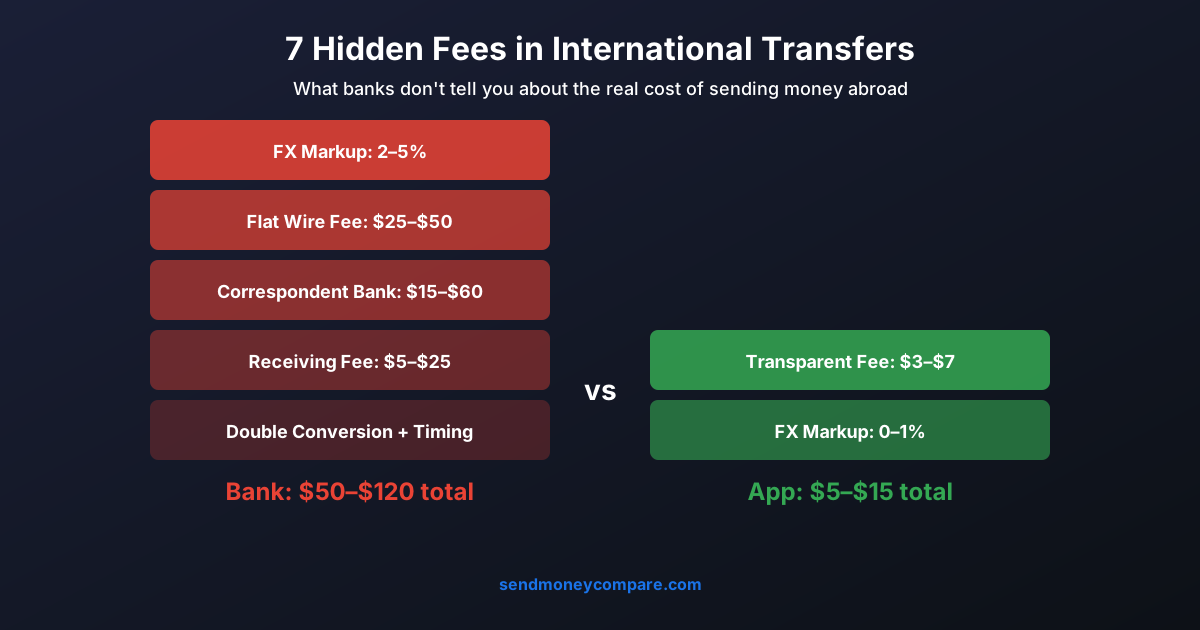
Quick answer: Banks make international transfers look cheap by advertising low or zero flat fees — then hide the real cost inside inflated exchange rates, correspondent bank deductions, and receiving-side charges. On a typical $1,000 transfer, these hidden fees can total $30–$80, compared to $5–$15 with specialist providers like Wise or Remitly. Below we break down every hidden cost, explain how each one works, and show you how to avoid them.
If you've ever sent money abroad through your bank, you probably noticed that the amount your recipient received was less than expected. That's not a rounding error — it's the result of multiple fees stacked on top of each other, most of which never appear on the transfer confirmation screen.
According to the World Bank Remittance Prices Worldwide database, sending money through a bank costs an average of 12.1% of the transfer amount — more than double the cost of using a specialist digital provider. Here are the seven fees responsible for that gap.
2. Flat Transfer Fees
Most banks charge an upfront fee for sending an international wire transfer. In the US, this typically ranges from $25 to $50 per outgoing transfer. UK banks charge £5–£30, and European banks charge €10–€40.
These fees are at least visible — unlike the markup. But combined with a bad exchange rate, a "$25 wire fee" transfer can actually cost you $75+ in total.
Many digital providers charge significantly less or nothing at all. Remitly offers $0 fees on most corridors, and OFX charges no transfer fees on any amount.
3. Correspondent Bank Fees (SWIFT Charges)
When your bank sends money internationally via the SWIFT network, the payment often passes through one or more intermediary banks before reaching the recipient's bank. Each intermediary can deduct a fee — typically $15–$30 per hop.
You won't know about these deductions until your recipient checks their account and finds $15–$60 missing from the amount you sent. Banks disclose this risk in the fine print as "correspondent bank charges may apply" but never tell you the exact amount upfront.
Specialist transfer services bypass the SWIFT correspondent banking chain entirely, using their own local payment networks to deliver funds. That's why services like Wise, Remitly, and WorldRemit can guarantee the exact amount your recipient will receive — no surprises. Learn more in our SWIFT codes explainer.
4. Receiving Bank Fees
Even after the money arrives, the recipient's bank may charge an incoming wire fee. This is common in developing countries and can range from $5 to $25, depending on the bank and country.
When you send via SWIFT, you typically choose one of three charging options:
- OUR — You pay all fees (sender, intermediary, and receiver). Expensive but the recipient gets the full amount.
- SHA — Fees are shared. You pay the sending fee; the recipient pays intermediary and receiving fees. This is the default at most banks.
- BEN — The recipient pays everything. Rarely used and often blocked by banks.
With services like Wise or Remitly, there are no receiving fees — the amount shown at checkout is exactly what arrives.
5. Poor Exchange Rate Timing
Banks often lock in your exchange rate at the time of processing, not when you initiated the transfer. If your wire takes 3–5 business days and the currency moves against you, you lose out — and the bank keeps the difference.
Some banks even use the previous day's closing rate rather than the current market rate, which can work against you in volatile markets. During the March 2026 central bank decision week, major pairs moved 1–2% within hours.
Digital providers like Wise lock in your rate at the moment of transfer, and many deliver within minutes or hours — reducing your exposure to rate fluctuations.
6. Currency Conversion on Both Ends
Some banks perform a double conversion — converting your money to USD first (if it's not already in dollars), then converting from USD to the destination currency. Each conversion carries its own markup.
For example, sending GBP to INR through a US-intermediary bank means: GBP → USD (markup #1) → INR (markup #2). If each conversion carries a 2% markup, you lose nearly 4% before the money even arrives.
Specialist services convert directly between currency pairs, eliminating the double-conversion problem entirely.
7. Minimum Transfer Charges and Tiered Pricing
Many banks impose a minimum fee regardless of how much you send. If your bank charges a minimum of $35 on any international wire, sending $200 means paying a 17.5% fee — before the exchange rate markup is even factored in.
Some banks also use tiered pricing where the fee changes based on the transfer amount, destination, or speed. These tiers are rarely advertised transparently.
Digital providers either charge no minimum (like OFX and Instarem) or keep minimums very low (Wise charges as little as $0.50 on small transfers).
Hidden transfer fees: sources and method
Fee data is based on published bank schedules, provider APIs, and our automated quote collection system that scrapes rates every 6 hours. Bank fee ranges are based on published fee schedules from Chase, Bank of America, Wells Fargo, HSBC, Barclays, Lloyds, and Commonwealth Bank of Australia as of March 2026.
External sources: World Bank Remittance Prices Worldwide, CFPB Sending Money Abroad guide, and FCA regulatory filings.
Hidden transfer fees: questions answered
Why do banks charge so much for international transfers?
What are the hidden fees in international wire transfers?
How can I avoid hidden fees on international transfers?
Do all banks charge exchange rate markups?
About the author